Department of Women’s and Gender Studies
Our People
Suzanne Swan
| Title: | Professor |
| Department: | Women's and Gender Studies McCausland College of Arts and Sciences |
| Email: | swansc@mailbox.sc.edu |
| Phone: | 803-777-2558 |
| Office: | Close-Hipp 513 |
Background
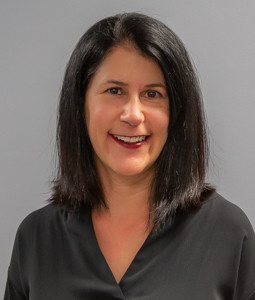
Suzanne Swan is a Professor in the Departments of Women’s and Gender Studies and Psychology. Her research focuses on gender-based violence, especially intimate partner violence and drugging (i.e., administering a drug or alcohol to someone without their knowledge or consent). Dr. Swan received a PhD in Social and Personality Psychology with a Minor in Women's Studies from the University of Illinois. The ultimate goal of Dr. Swan’s research is to create knowledge that will illuminate solutions for the problem of gender-based violence and the suffering it causes. Dr. Swan teaches courses in Women’s Health, Feminist Theory, and Social Psychology.
Dr. Swan and colleagues found that 1 in 13 college students reported that they had been drugged, and 1.4% of students reported drugging someone or knowing a drugger (Swan, Lasky, Fisher, et al., 2017). A few of Dr. Swan’s publications related to drugging include:
Swan, S.C., Pomerantz, J.B., Fisher, B.S., & Lasky, N.V. (2020). A conceptual overview of drugging: It’s not what you think. In R. Geffner et al. (Eds.), Handbook of interpersonal violence across the lifespan. Springer.
Swan, S.C., Lasky, N., Fisher, B.S., Woodbrown, V.D., Bonsu, J.E., Schramm, A.T., Warren, P.R., Coker, A.L., & Williams, C.M. (2017). Just a dare or unaware? Outcomes and motives of drugging (“drink spiking”) on three college campuses. Psychology of Violence, 7, 253-264.
Lasky, N.V., Fisher, B.S., Henriksen, C.B., & Swan, S.C. (2017). Binge drinking, Greek life membership, and first-year undergraduates: The “perfect storm” for drugging victimization. Journal of School Violence, 16, 173-188.
Schramm, A.T., Swan, S.C., Lambdin, M.N., Fisher, B.S., Coker, A.L., & Williams, C.M. (2018). Prevalence and risk of drugging victimization among sexual minority and heterosexual college students. Criminal Justice Review, 43, 45-59.
Intimate partner violence is a pattern of abusive behavior used by an intimate partner to gain or maintain power and control over their partner. It can be physical, sexual, emotional, economic, or psychological. It includes any behaviors that intimidate, manipulate, humiliate, isolate, frighten, terrorize, coerce, threaten, blame, hurt, or injure someone. The World Health Organization estimates that worldwide, over 1 in 4 women experience intimate partner violence (IPV) (World Health Organization, 2021). In the United States, about 1 in 10 men experience intimate partner violence (CDC, 2024).
Domestic violence civil protection orders (CPO) are the primary legal mechanism for protecting people from intimate partner violence, with over 1 million granted annually (Durfee, Swan, & Spearman, 2026). Dr. Swan’s most recent research is on CPOs and firearms in South Carolina. Firearms use in domestic violence greatly increase risk of severe injury and death, and firearms are the primary mechanism of injury in half of intimate partner homicides (Swan & Martin, 2026). Intimate partner violence and femicide (murder of women) are persistent problems in South Carolina, with the state ranking in the top 10 states for rates of femicide in 23 out of the 25 years studied (Violence Policy Center, 2023). Most of these femicides occurred using firearms (Center for Gun Violence Solutions, 2023). In response to the lethality of firearm use in intimate partner violence, federal law requires firearms prohibitions to apply automatically when CPOs are granted (with a few exceptions). In a study that reviewed nearly all CPOs filed in 2019, Dr. Swan and colleagues found that, despite the federal law requirements, 85% of CPOs included firearm prohibitions, but 15% did not. Further, courts have discretion to include state firearms prohibitions to CPOs, which offer additional protections that federal firearms prohibitions lack. Only 32% of eligible CPOs received state firearms prohibitions. A few of Dr. Swan’s publications related to CPOs include:
Swan, S.C., & Martin, L.V. (2025). Domestic violence involving firearms: Why do so few civil protection orders issued in cases involving firearms include full firearm prohibitions? Feminist Criminology, 21(1): 46-59.
Durfee, A., Swan, S.C, & Spearman, K.J. (2025). Understanding domestic violence civil protective orders in context: Introduction to the January 2026 Special Issue. Feminist Criminology, 21(1): 3-10.