Faculty

Jimi Adams
Jimi Adams is a professor of sociology at the University of South Carolina. Broadly, his research revolves around addressing how networks constrain or promote the diffusion of information and/or diseases through populations. Much of this work has focused on HIV/AIDS among populations in the U.S. and sub-Saharan Africa. Recently, he has spent more time examining the integrative patterns and processes in problem-focused areas of science that draw from many academic disciplines, including HIV/AIDS, demography and the environment. In addition, he has a primary interest in using social network theory to improve strategies used in the design and implementation of primary data collection projects.

Laura Aufderheide Brashears
Laura Brashears is an instructor in the Department of Sociology and a member of the graduate faculty at the University of South Carolina. Primarily a social psychologist of educational inequality, her work seeks to understand how various social forces influence the self and social action, including social networks. She is currently using insights from Identity Theory, network theory and Affect Control Theory to understand the behavior of student veterans on college campuses as a combined effect of network and identity properties. Her network research has appeared in Advances in Group Processes and Network Science, among other outlets. She has received grants from the National Science Foundation and the University of South Carolina McCausland College of Arts and Sciences.

Matthew E. Brashears
Matt Brashears is a professor and chair of the Department of Sociology at the University of South Carolina. His work crosses levels, integrating ideas from evolutionary theory, social networks, organizational theory and neuroscience. His current research includes the role of lying and secret keeping in social networks, understanding how organizations and cultural forms compete for members, as well as modeling the societal reaction to a nuclear detonation on a U.S. city. His work has appeared in Nature Scientific Reports, the American Sociological Review, the American Journal of Sociology, Social Networks, Advances in Group Processes and Network Science, among others. He has received grants from the National Science Foundation, the Defense Threat Reduction Agency, the Army Research Institute, the Army Research Office and the Office of Naval Research.

Brian Levy
Brian Levy is assistant professor of sociology at the University of South Carolina. He studies neighborhoods, segregation and inequality in the United States. One of his primary projects explores how ties between neighborhoods that are forged by residents’ daily movements create a powerful, but previously unobserved, neighborhood effect. He uses big data on routine mobility to estimate neighborhood networks, theorize mobility-based neighborhood (dis)advantage, and develop measures of city-level structural integration. A second project takes a life course perspective to analyze neighborhood effects on individuals’ socioeconomic and health outcomes. He is also engaged in collaborative projects studying how nuisance flooding impacts everyday mobility, sidewalk access and quality varies across Columbia, South Carolina, neighborhoods, and how big data from Meetup.com reveal variation in associational social capital across the United States.

Joe Quinn
Joe Quinn is an assistant professor of sociology at the University of South Carolina. He studies how network structures and environmental shocks intersect with social psychological and cognitive mechanisms to shape beliefs about, and interactions between, actors from different categorical groups. Joe’s current projects involve: (1) measuring beliefs about group identity and status; (2) identifying structural conditions that cause these beliefs to emerge and change in broad national cultures or small organizations; and (3) evaluating the impact of network or ecological change on the reproduction or attenuation of inequities and social stratification. He studies this set of processes through agent-based modeling simulations, novel surveys and experiments, and field-based research partnerships with organizations.

Jun Zhao
Jun Zhao is an assistant professor of sociology at the University of South Carolina. She received her doctoral degree in sociology in 2017 from the University of Georgia. Prior to joining the University of South Carolina in 2023, she was a postdoctoral fellow with the Program of Quantitative Social Science at Dartmouth College from 2017 to 2019 and worked as an assistant professor at Georgia State University from 2019 to 2023. Her research broadly centers on social inequality and exclusion, with an emphasis on networks, health, and gender and race. Much of her work involves the analysis of longitudinal datasets and large-scale surveys. She also collects her own data by designing and conducting original survey experiments.
Graduate Students

Valerie Barron
Valerie Barron is a Ph.D. student in the Department of Sociology. Her research interests include social psychology, medical sociology, networks, as well as media and technology. She prefers to employ mixed methods in her projects and has extensive experience with experimental methods in social psychology. Her master’s thesis experimentally examined how status differences influence levels of initial trust given to complete strangers when asked to work collectively on a task.

Nicolas Harder
Nick Harder, Ph.D., is a Bridge Humanities Fellow at the University of South Carolina. His research explores how information, meaning and valuation diffuse through social networks, how this information mutates through interaction, and how it influences individuals’ behaviors. His current focus is on how individuals value the culture they consume, how this valuation changes over time, and how an individual’s valuation of culture combines to form its status within society. He uses a wide range of research methods, including laboratory experiments, network analysis, advanced quantitative methods and simulation. He is primarily responsible for the development of the Hybrid Blau Space model, an agent-based model for simulating competition between social entities. He is also leading an expansive data collection effort that is fielding a series of five surveys to collect high-quality information on individuals’ cultural consumption and valuation, as well as their civic participation, political ideology and discussant networks. This effort includes the Cultural Objects Datasets and the Voluntary Organizations and Civic Participation Dataset.

Seonjin Lee
Seonjin Lee, a Ph.D. student in the School of Hospitality and Tourism Management at the University of South Carolina, is a Presidential Fellow. His research interests lie in understanding the impact of tourism on societies, the resilience of the tourism industry, and the analysis of spatiotemporal tourism data using network analysis. Lee employs both spatial and network methods to examine national and international mobility data. His current research projects focus on daily mobility in the U.S. and the sociodemographic factors influencing human mobility boundaries. Lee's work has been published in journals such as Annals of Tourism Research and Journal of Travel Research.

Chang-Yi Lin
Chang-Yi Lin is a Ph.D. candidate in the Department of Sociology. He is interested in international migration, social capital, aggression networks and social network analysis more generally, with a particular focus on Taiwanese society. His master’s thesis used social network analysis to explore global and gendered migration patterns. His dissertation will focus on aggressive behavior networks, and factors predicting the occurrence of aggression, the targets of aggression, and the mental health consequences.
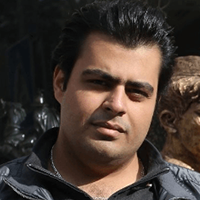
Mostafa Mobli
Mostafa Mobli is an instructor in the Department of Mechanical Engineering and an M.A. student in the Department of Sociology at the University of South Carolina. His interdisciplinary research bridges engineering and social science, with interests in computational social science, social network analysis and the political sociology of the Middle East. His current work examines the politics of religious conversion in Iran, drawing on sociological and historical frameworks. He is also interested in applying agent-based modeling and network-based approaches to questions about Iranian political attitudes and the diffusion of collective attitudes through social networks. In the College of Engineering and Computing, he teaches across the aerospace and mechanical engineering curricula, with a research background in computational fluid dynamics, heat transfer, plasma actuators and multiphase flow. He holds a Ph.D. in mechanical engineering from the University of South Carolina.

Victoria Money
Victoria Money, Ph.D., is a postdoctoral research associate at the Arnold School of Public Health. Her research centers on how social conditions impact social network structure and interpersonal relationships, how individuals navigate complex social spaces, and how their behaviors affect their health. In particular, she asks whether the structure of an individual’s network impacts their relationships and agency in achieving their health-related goals and outcomes. At the macro level, she examines how social conditions such as stigma and racism shape social networks, creating different network typologies. At the meso level, she examines how social network structure and relationship characteristics influence social support and access to resources, as well as interpersonal dynamics such as deception. At the micro level, she examines how social support and access to resources operate as psychosocial mechanisms through which these macro- and meso-level factors impact pathways for health. She has published work in Social Psychology Quarterly on anticipatory deflection, as well as chapters on cognition and networks in the SAGE Handbook of Social Networks and on the social psychological examination of deception in the Elgar Handbook of Social Psychology.

Gage Pierce
Gage Pierce is a master’s student in the Department of Sociology. They are interested in social networks, terrorism, inequality and Blau space. They earned their B.A. in sociology from the University of South Carolina, during which they became involved in several research projects. Their efforts included helping with projects on deception in social networks and working with Nick Harder and Matthew Brashears to create an R package version of the new Hybrid Blau Space model (HBSm). They plan to write their master’s thesis on organizations competing within Blau Space and the qualities that make them more competitively viable, such as generalist or specialist recruitment approaches, and how those traits affect their ability to remain viable in times of crisis such as COVID-19.