
Fall 2026 Events
Time: 10:00am-11:30am
Location: Baraza Global Fellows lounge (Room 172) South Quad
The Walker Institute's Area Study programs are hosting an event on the history of coffee, its origins, and its growth into a $250 billion/year global business. This event will showcase demonstrations on coffee roasting and brewing methods from around the world, including espresso, pour-over, Ethopian bunna, Turkish & Saudi coffee, and more. Continental breakfast will be included.
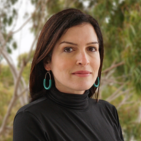
Elana Resnick
Slavic, East-Central European, and Eurasian Studies and European Studies
Time: 4:00pm-5:15pm
Location: Close-Hipp 464
Sustainability has become a touchstone for development worldwide, promising an antidote to environmental degradation and capitalism’s excess: waste. Refusing Sustainability offers a different account of both sustainability and waste by uncovering the intersections of international environmental reforms and racialized labor. In Bulgaria, Romani women comprise the bulk of the country’s waste workers, while anti-Roma racism casts them as socially disposable. Yet without their labor, the country cannot meet the sustainability targets required by the European Union. Drawing on twenty years of fieldwork—including eleven months working alongside Romani women street sweepers, and years embedded in waste organizations, political campaigns, Roma NGOs, and activist groups—this talk approaches Romani life-worlds as sites of creative production. In doing so, it illuminates broader dynamics of post-socialist racial capitalism, progressive environmentalism, democratic failures, mutual aid, and the power of women’s friendships.
Hannah Shepherd
Asian Studies
Time: 3:45pm-5:15pm
Location: Gambrell 428-429
Dr. Hannah Shepherd, Assistant Professor of History at Yale University, will discuss her new book, The Narrowing Sea: Fukuoka, Pusan, and the Rise and Fall of an Imperial Region (University of California Press, 2025). The book examines the shared histories of Pusan and Fukuoka over the eight decades from Japan's forced opening of Korea's ports in 1876 to the end of the Korean War in 1953. Drawing on both Japanese and Korean archives, and emphasizing the concept of imperial urbanization, Dr. Shepherd challenges traditional views of empire and urban growth and shows how local networks, migration, and capital flows shaped the region's exploitative and uneven geographies.
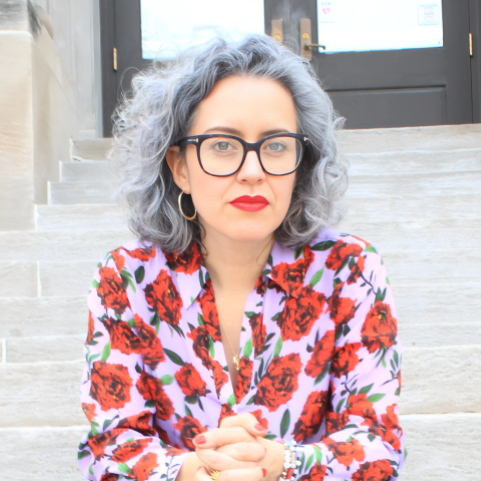
Lina-Maria Murillo
Latin American, Caribbean, and U.S. Latinx Studies
Time: 4:45 - 6:30 pm
Location: Gambrell 429
Lina-Maria Murillo is Associate Professor of Reproductive Health, Rights, and Justice in the Department of Social and Cultural Analysis at the University of Texas at Austin. Her first book, Fighting for Control: Power, Reproductive Care, and Race in the U.S-Mexico Borderlands (UNCP 2025), examines the histories of reproductive control and violence against Mexican-origin women and how they organized to create spaces of reproductive care and liberation throughout the twentieth century. Murillo’s latest article, “Espanta Cigüeñas: Race and Abortion in the U.S-Mexico Borderlands,” won the 2023 Catharine Stimpson Prize for Outstanding Feminist Scholarship in Signs: A Journal of Women and Culture in Society. Her research is supported by several grants and fellowships, including from the American Association of University Women (AAUW), American Council of Learned Societies (ACLS) and the Ford Foundation.
Spring 2026 Events
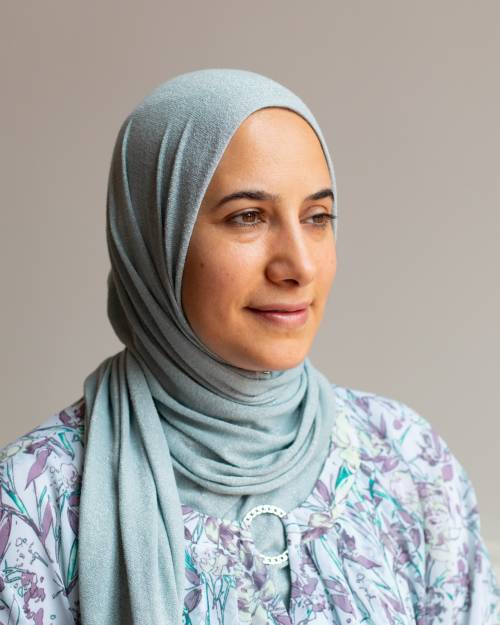
Hadiya Mubarak
Islamic World Studies
Time: 6:30-8:00pm
Location: Close Hipp 450
This talk will cover themes related to Islam, women, and gender in Professor Hadiya Mubarak’s book, Rebellious Wives, Neglectful Husbands: Controversies in Modern Qur’anic Commentaries as well as broader issues pertaining to the ways in which Muslim women have historically been the subject of various reforms and commentary in both the Muslim world and in the West. In this book talk, Hadia Mubarak explores the impact of modernity on three influential Qurʾanic commentaries in the twentieth century through the lens of gender. Mubarak illustrates the ways in which colonialism, nationalism, and modernization set into motion new ways of engaging with the subject of women in the Qurʾan. Focusing her analysis on verses dealing with marriage, divorce, marital hierarchies, and polygyny, Mubarak offers a critical and comparative analysis of pre-modern and modern interpretations, illustrating pluralistic, complex, and evolving interpretations of women and gender in the Qurʾan.
Hadiya Mubarak is an Associate Professor of Religion at Queens University of Charlotte, where she teaches courses on Islam, comparative scriptures, women and gender in the Muslim world, the history of Islam in America, and religious representation in popular culture, among other courses. Mubarak completed her Ph.D. in Islamic Studies from Georgetown University, where she specialized in modern and classical Qurʾanic exegesis, Islamic feminism, and gender reform in the modern Muslim world. She currently serves as a scholar-in-residence with the Muslim Community Center of Charlotte (MCC), a Board of Advisors member with the Carleton Center for the Study of Islam (CCSI), and a scholar with the Institute for Social Policy and Understanding (ISPU).
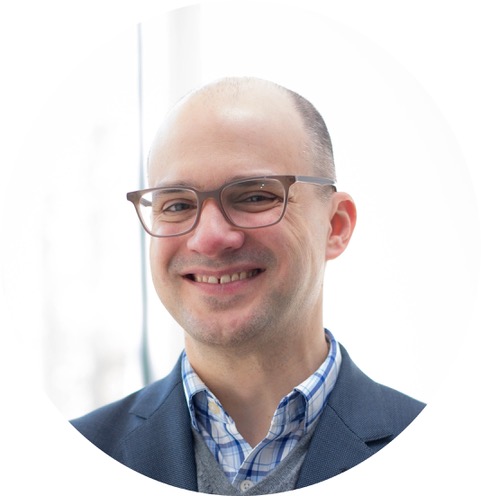
Kevin Karnes
Slavic, East-Central European, and Eurasian Studies and European Studies
Time: 1:10-2:00 pm
Location: School of Music Room 006
In the late 1970s, following years of searching, Arvo Pärt began to work in his signaturetintinnabuli style of composition, a stylistic turn widely mythologized as the achievement of a solitary genius working in isolation from his contemporary world. This presentation sketches a different picture, one in which an expansive community of younger artists nurtured Pärt's tintinnabuli project in its development, whose members' own creative endeavors—in fields as diverse as disco culture, new wave music, and performance art—were profoundly shaped by Pärt's. Some of these young artists' projects gave rise to new communities in turn, opening new worlds of creative possibility in the Soviet 1980s, much as Pärt's had done a decade before.
Kevin Karnes is a musicologist who studies sounding expressions of identity, difference, and belonging in contemporary eastern and central Europe. His work bridges archival research and ethnography, engaging projects in such domains as sound studies, anthropology, philosophy, and art history. He is the author of four books, most recently Sounds Beyond: Arvo Pärt and the 1970s Soviet Underground (University of Chicago Press, 2021), and the editor of seven volumes, including Korngold and His World (Princeton UP, 2019) and Jewish Folk Songs from the Baltics (A-R Editions, 2014). He has served as editor-in-chief of the Journal of the American Musicological Society (2020-22) and founding series editor of the Oxford Keynotes Series of Oxford University Press (2014-20). Since 2022 he has taught as Visiting Professor in the Faculty of Musicology at the Jāzeps Vītols Latvian Academy of Music in Riga. His research has been supported by grants, fellowships, and awards from the ACLS, the NEH, and the Association for the Advancement of Baltic Studies. He is currently writing a new book on techno culture and east/west European integration at the turn of the 1990s, titled Electric Future: Berlin, Techno, the USSR, and the Dream of a New Europe.
Kevin Karnes
Slavic, East-Central European, and Eurasian Studies and European Studies
Time: 4:00-5:00PM
Location: Close-Hipp 451
From the mid-1970s through the end of Soviet rule, the Deutscher Akademischer Austauschdienst and the West German curatorial organization Neue Gesellschaft für bildende Kunst collaborated with Soviet state security to host exhibitions and residencies of Latvian artists in West Berlin. Mining archives in Berlin and Riga, this presentation aims to understand the motivations and mechanisms behind these projects, especially the key roles that personal relationships played in opening possibilities for East-West exchange. Tracing the experiences of the painter Maija Tabaka and the musician Hardijs Lediņš in particular, it reflects on both the breathtaking opportunities and the existential perils that such exchanges could present for Soviet Latvian artists.
Kevin Karnes was appointed in Fall 2020 as the Associate Dean for the Arts, a new position in the College administration. In this role, Karnes works across the College and the University on a wide range of arts-related initiatives that center the arts in institutional conversations about research, learning, and civic engagement. He partners with faculty, students, and institutional leaders to build programs in the creative and performing arts, including teaching and creative partnerships with Atlanta artists and arts organizations. He also serves as executive director of the College’s Center for Creativity and Arts and is a professor in the Department of Music. He earned his PhD from Brandeis in 2001 and is a historical musicologist.

Magdalena Stawkowski
Slavic, East-Central European, and Eurasian Studies
Time: 4:30-5:30pm
Location: Gambrell 429
Description:
In the aftermath of the Soviet Union’s collapse, Kazakhstan inherited the remnants of one of the world’s most contaminated landscapes: the Semipalatinsk Test Site, known locally as the Polygon. Resigned to dispossession, residents have chosen to remain on the abandoned nuclear test site, despite the isolation and the radioactive environment, rather than face marginalization or the rigors of a neoliberal world.
Atomic Collective examines this nuclear legacy through a decade-long ethnographic examination of the village of Koian, situated on the border of the test site. Facing residual radiation all around them and isolation, Koianers persist, reshaping their pastoral existence among the ruins and scientific debates surrounding genetic damage. Drawing on first-hand accounts and archival research, this book explores the resilience and everyday survival strategies of a community left behind to fend for itself in the shadow of nuclear testing. It offers a unique perspective on life in a nuclear zone and poses fundamental questions about human resilience and the impact of historical events on a collective identity. Atomic Collective sheds light on a community overlooked in the larger Cold War histories of atomic testing.
Magdalena Stawkowski is an associate professor in the Department of Anthropology at the University of South Carolina. She earned her PhD from the University of Colorado Boulder in 2014 and has held roles at the Danish Institute for International Studies; the Center for Slavic, Eurasian, and East European Studies at the University of North Carolina-Chapel Hill; and the Center for International Security and Cooperation at Stanford University, as a MacArthur and Stanton Nuclear Security Fellow. Specializing in cultural and medical anthropology, Stawkowski focuses on militarized and nuclear spaces, the political economy of health, and the socio-cultural legacies of Soviet era nuclear testing in Kazakhstan, where she has conducted more than a decade of fieldwork.
Her recent book, Atomic Collective: Radioactive Life in Kazakhstan, examines how communities near the former Semipalatinsk Test Site navigate contaminated landscapes. Her work has been recognized with the Anthropological Responses to Health Emergencies Policy Award from the Society for Medical Anthropology. She has collaborated on international projects examining Cold War radioactive legacies in Kazakhstan, the Marshall Islands, and French Polynesia. Currently, she is engaged in collaborative and comparative research on tritium bioaccumulation and biomagnification in the Semipalatinsk Test Site region and the Savannah River Site in South Carolina.

Thomas Garcia, Ph. D., a professor of ethnomusicology, guitarist, and luthier, specializing in Brazilian and Portuguese music from Miami University (in Ohio).
Latin American, Caribbean, and U.S. Latinx Studies
Time: 4:30-6:00pm
Location: Russell House Theater
Fall 2025 Events
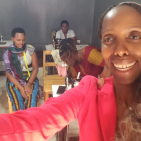
Dr. Yvonne Kamugisha: Founding and Artistic Director of Fashion Diplomacy Renaissance Initiatives
African Studies
TIme: 4:00pm
Location: Anne Frank Center
Dr. Kamugisha’s research critically examines U.S. influence and the role of religious actors in reconciliation and genocide prevention in Burundi, emphasizing regional dynamics that affect peacebuilding through judicial processes. She founded and runs organizations that use fashion and sport to foster cultural understanding, empowerment, and restorative relationships between states, promoting dialogue, healing, and crosscultural engagement.
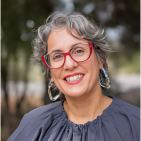
Dr. Catherine S. Ramírez:Professor of Latin American and Latino Studies at the University of California, Santa Cruz.
Latin American, Caribbean, and U.S. Latinx Studies
Time: 5:00pm
Location: Hollings Library Program Room
Abstract: Populist politicians often warn that migrants will steal native workers' jobs. Even though machines have long threatened to replace workers (and have done so in some industries), few, if any, populist politicians claim to be anti-automation. This talk explores this discrepancy by looking at labor and extraction in Latinx speculative fiction. Inspired by Afrofuturist visions of a more inclusive future, I examine the slow violence and permanent temporariness of undocumentedness and invite you to join me in imagining a future not without migrants, but without undocumentedness.

Dr. Lanie Millar: University of Oregon
Latin American, Caribbean, and U.S. Latinx Studies
Time: 3:30pm
Location: Petrigru Room 213
Co-Sponsored by the Portuguese Program, the Department of Languages, Literatures and Cultures, and the Walker Institute
Dr. Noah Gardner
Middle East and Islamic World Studies
Time: 4:30pm
Location: Petigru Room 213
Co-Sponsored by the Department of Religious Studies

Jan Banning, Photographer/Speaker
African Studies
Time: 4:15 - 6:00 P.M.
Location: Gambrell Hall 412
Description: Dutch photographer Jan Banning speaks about the role that social advocacy and commentary play in his artistic photography of themes such as Postgenocide Rwanda, the US Criminal Justice System, and National Identities.

Dr. Cecilia Márquez, Author
Latin American, Caribbean, and U.S. Latinx Studies
Time: 4:30-6:00pm
Location: Gambrell 429
Co-Sponsored by: The Walker Institute, Southern Studies, Honors College, History Center, Center for Civil Rights History & Research
Speakers:
Jae Won Chung (Rutgers University)
Jingtao Harry Gu (William and Hobart Colleges)
Jie Guo (University of South Carolina)
Jung Joon Lee (Rhode Island School of Design)
Minna Lee (Princeton University)
Sohl Lee (Stony Brook University)
Asian Studies
Location: Gambrell 431
28th Annual Comparative Literature Conference
The 2025-2026 annual Comparative Literature Conference will include two main events,
a symposium on global Asian photography in the early fall of 2025 and a graduate symposium
in spring 2026.
Transnational Visual Culture
Across Korea, Hong Kong, and Burma
A Symposium
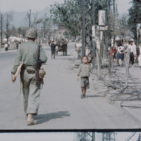
Transnationalism as a methodological approach, a circulation of images/objects, and a distributed network of scholars has been an important development in the field of Asian Studies. To be held August 22-23, 2025 at the University of South Carolina, this symposium on transnational Asian visual culture will reflect, and build on, this twofold current in Asian studies and the studies of global visual culture in North America. It also seeks to reconceptualize multiple temporalities of global modernity by exploring photographic image-making and image-circulation and compel decolonial imaginations from a transnational perspective. This in-person interdisciplinary conference will bring together speakers and discussants specializing in visual culture, Korean Studies, art history, comparative literature, Asian studies, and related fields, as we collectively explore images of, from, and beyond Korea, Hong Kong, and Burma. The conference will consist of three sessions, a roundtable discussion between speakers and graduate students, and a visit to USC’s Moving Image Research Collections (MIRC) to explore footage from their military and other collections.
Sponsors
Department of Languages, Literatures, and Cultures, USC
Association for Asian Studies-Northeast Asia Council (AAS-NEAC)
Walker Institute of International and Area Studies, USC
Moving Image Research Collection, USC
Visit our Area Studies Events Archive to learn more about previous Area Studies Events that the Walker Institute of International and Area Studies has hosted.