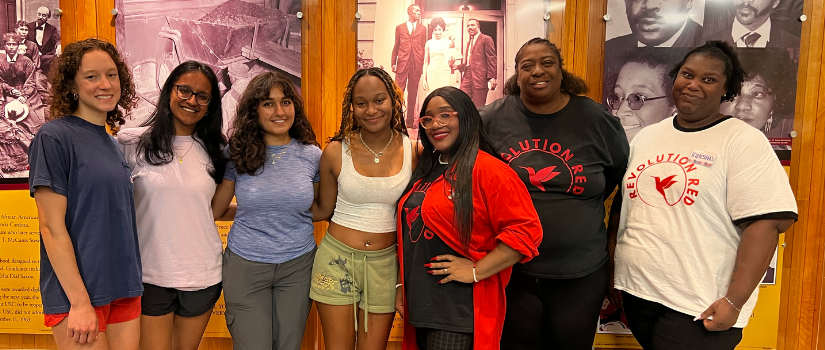
WGST Student Assistant Amiya Ramkissoon recently conducted an interview with the executive board of the USC campus organization, No Periods Left Behind (NPLB). NPLB is an advocacy-based organization focused on menstrual-equity and period poverty. They are the first-ever organization on USC's campus centered around these issues. Their executive board is comprised of: President: Aastha Arora, VP: Shriya Gandham, Treasurer: Dhruva Patel, Secretary: Paige Durham, Social Media: Kendra Rhein, Co-Outreach: Mira Bhutani, & Co-Outreach: Courtney Brooks.
What is No Periods Left Behind?
No Periods Left Behind (NPLB) is the first menstrual equity-based organization here on USC’s campus. We focus on advocacy, education, and allocating resources to help reduce the effects and stigma of menstrual or period poverty.
What prompted you all to start this club at USC?
Three of my friends, who have since graduated, and I entered the Pay It Forward competition hosted by the SC Electric Cooperatives, which challenges students at three South Carolina colleges to find solutions to real-world problems in rural South Carolina. As a group of menstruators, the four of us recognized our privilege in being able to afford and access period products, so we researched the impact of period poverty in rural areas. Through statistical data, resident interviews, and visits to rural stores, we built a mock solution that focused on hosting donation drives in the community, providing menstrual hygiene seminars, and advocating for legislative action to fight for menstrual equity. After winning the statewide competition in 2023, we realized we wanted to bring our initiative to life as an organization on campus!
When were you all first made aware of period poverty and its consequences?
I was first made aware of period poverty in middle school via a family friend's TED Talk. This was shocking as food deserts and other social issues were discussed frequently by school systems, family members, and the general community. Yet, they remained silent when it came to issues of similar access “deserts” when they were tied to menstruation, though these too impact education and future opportunities for many.
How have you all seen this issue specifically impact college campuses?
I’ve seen this issue be far more pervasive than a lot of people realize, whether it’s through inflated pricing and luxury goods taxing on period products, or ramifications of said pricing resulting in missed classes and direct impacts to education.
Do you all think that the stigma surrounding menstruation can create compounded obstacles and contribute to period poverty?
Undoubtedly, the more stigmatized the topic, the less it is mentioned and discussed, which compounds the problem by bringing less awareness, lower levels of education and information, as well as fewer solutions. It also tends to discourage people from even confronting the issue directly due to differing views on and comfort levels discussing menstruation. Simply adding another factor and obstacle into the design and implementation of solutions, especially as outlooks range widely between cultures and regions.
What are some events and initiatives that NPLB has done and/or accomplished?
We plan to continue hosting packing parties and contributing to the larger community through donations of products and contributions to education and awareness. We also hope to further our involvement in legislative events and policy on the local and statewide levels and to expand our network of contacts both on and off campus to further contribute to the community!
No Periods Left Behind has donated over 15,000 menstrual products and over $1,500 to schools and shelters across South Carolina. We have also led initiatives to assemble menstrual kits for the Gamecock CommUnity shop and place menstrual product baskets in the Thomas Cooper Library during finals week. To promote proper menstrual education, we led a menstrual hygiene seminar for 6th grade girls at Salude Middle School. Additionally, we testified as an organization at a South Carolina Finance Subcommittee hearing to advocate for the removal of the tampon tax, and spoke at the Joint Citizens and Legislative Committee on Children to advocate for free menstrual products in public school bathrooms.
What plans do you have as an organization for the future?
We are continuing with our initiatives for product drives and packing parties! We are working on expanding our focus to serve not only the broader community, but our own student community as well. We also plan to work on the advocacy piece of No Periods Left Behind by writing to state legislatures on the issues surrounding reproduction, menstruation, women’s health, etc. that are often heavily debated.
On campus, we love to collaborate with other clubs by doing co-drives and packing parties! This is a great way to combine our efforts and involve more people in our mission! We will be having lots of these events this semester, especially!
How can students on campus get involved with No Periods Left Behind?
Join our club! We host a variety of events, including packing parties where we make and donate packs of menstrual products to various organizations and charities, legislation and advocacy events, percent nights at local cafes and businesses, and speaker events.
What are other ways students can get involved and advocate for period poverty and ending menstrual stigma within their communities?
There are so many other routes to help contribute, especially in your individual spheres and communities. One big way is simply by facilitating conversations about period poverty, even in a casual and offhand manner. Spreading awareness does not have to be an intense sit-down conversation, but could look like a casual exchange of information or a small comment about the pricing of products.
There are also many places in the community where you can donate products or volunteer your time. This issue is very prevalent even in our community, so getting involved to help combat this issue and serve those in need is another great way for people to get involved.