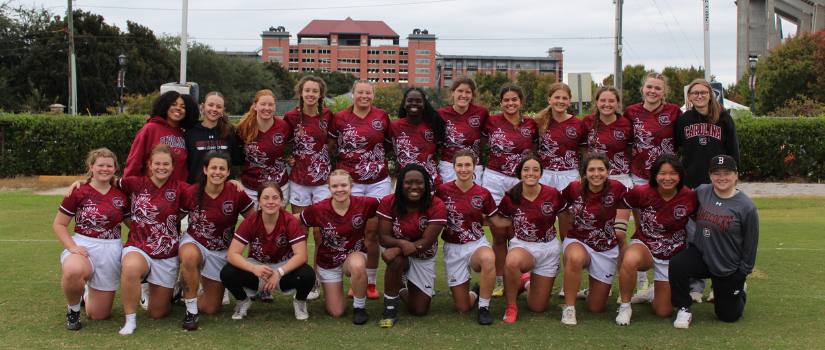
Sophomore year when my friends told me they were joining the women's rugby team, I was entirely perplexed. Although I didn’t grow up around rugby in my small town, I knew rugby existed, but it never occurred to me that USC had a team—especially not a men’s and a women’s team. Within the last few years, from great influential friends and public figures like Ilona Maher, I’ve seen awareness of rugby pick up speed. These individuals are iconic and clear examples of striving towards a goal and excelling at it. As time has gone on, I’ve become more curious in the bond, work ethic, and community within USC’s Women's Rugby.
In this interview, joined by Coach AB Reese, President Kayla Thompson, and player Christianna Gutierrez we dove deep into the community and drive that follows this rigorous sport—rugby. As we discussed this outlet, I began to further understand their love and passion for the sport as well as the community etched into the game and the connections that’ll stay afterwards.
Rugby & Identity
When asked how they first became involved with rugby, Thompson and Gutierrez shared their experiences as USC freshmen joining the sport.
Gutierrez described the women’s rugby team as a defining force of her college experience that offered a sense of identity alongside a supportive community. Growing up in the north, college sports—especially SEC football—weren’t a big part of Gutierrez’s life. By joining the rugby team, it gave her “that feeling of being a Gamecock at USC and the sort of pride we have”. Rugby quickly evolved for her from just a sport to a family and community. It provided friendships, relationship, and lifelong connections.
Adjusting to USC also came with challenges. After moving to Augusta, GA at age 11, Gutierrez was used to diverse environments and a wide mix of identities. Arriving at USC brought “a bit of a culture shock”; but rugby brought that familiarity and a reminder of home back to campus with the intersectionality and layering of identities. According to Gutierrez, the team was “easy to relate to and made me feel comfortable in that space” giving her an outlet to just be a “USC student with USC pride”.
For Thompson, she admits she was “a completely different person” when she first arrived on campus as a freshman, unsure of herself and new to the world of rugby. Everything changed the moment she stepped into the rugby community with the most influential people to enter her life. As she put it, “these girls I see every week are my family in many different ways”. This feeling has fostered a sense of belonging and an “unspoken understanding of unconditionally supporting each other and being there for one another, whether it be on the field or off”. Along with these qualities, it has also helped Thompson build leadership skills and grow as an individual by leading the pitch.
Reese further described her own involvement as evolving from her undergraduate institution into graduate school at USC. She discussed the isolation she has felt as a graduate student “It's very siloed, so you just kind of spend time with your department. Getting the opportunity to coach is a way to still connect with the community since most other grad students I know don't feel a lot of Gamecock pride... but I can’t live without rugby. That was nonnegotiable.”
With this comes space to thrive, to find your people and yourself in the process. As described by Thompson, rugby isn’t just a game but rather a community that has allowed her to flourish in ways she never expected. Coming to USC with no prior experience in competitive sports was scary and rugby was the avalanche that pushed into unfamiliar territory—albeit with great reward and newfound experiences.
“With You”
Thompson emphasized "From day one of my first practice ever, it was stressed to us to communicate with your teammates—you’re with them, supporting them on and off the field and whenever we’re in need,” she said. Over time, that expectation became instinct. “The majority of us have this understanding of ‘with you’—we’re living it with each other. These are some of my best friends. There are so many different connections that have been built over the past few years and it’s all built on the foundation of the sport: supporting your teammates.”
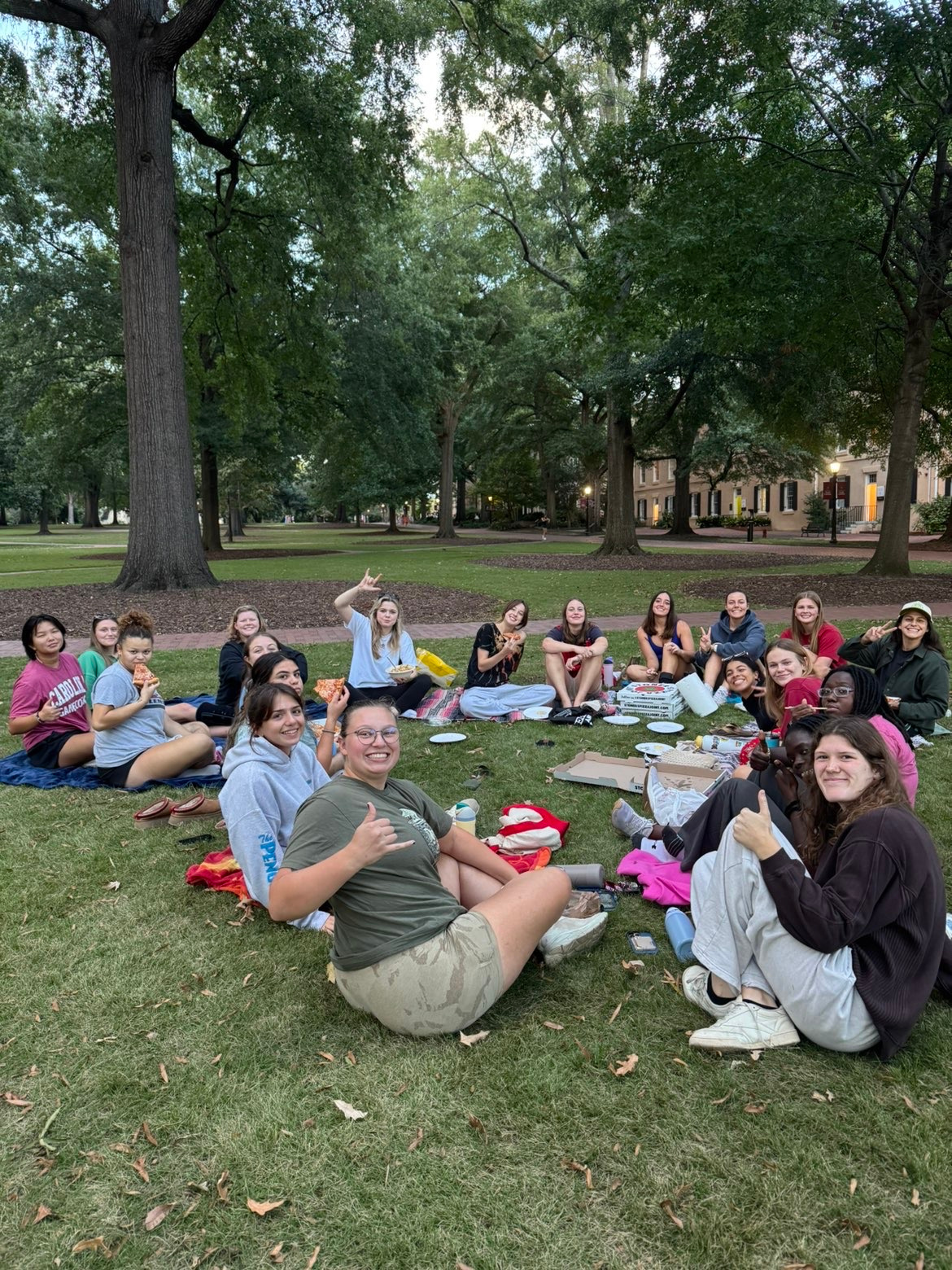
Ask anyone on the women’s rugby team and you’ll hear the same sentiment expressed: community first, everything else follows. That echoes in practice, in the classroom, in late-night study sessions, and in the way teammates talk about one another. As expressed by Gutierrez, it could be going to the gym together, getting coffee on a whim, or the traditional team dinners that keep the team spirit and family intact. Gutierrez noted that “... it helps the team morale... because a significant part of sports and having a good team is when you’re able to know your people personally.” It’s the heartbeat of a team that plays hard and shows up even harder.
For Gutierrez previous sports teams were misaligned, whereas the rugby community helped align the mental with the physical: “With this team, I know these people from the front to the back... so I trust them”. That trust grows into something fierce: “I’m looking at these people like, ‘Sure, yeah, we’re teammates’, but it’s also like we’re a unit” Gutierrez expressed. Reese added that’s predominantly “…the nature of the sport. It's the love of the sport above and beyond anything else. I think that's what's unique about it”. Rugby has unique demands for cementing that bond: “I’ve played other sports, but you don’t put your body on the line for another person the way you do in rugby. No matter what, you're not going into anything alone on the rugby pitch. There’s a lot of people out there and there's a lot of big hits. I just think it always translates off the pitch, even if you’re not best friends—if somebody threatened one of your teammates it’s like, ‘I would die for them’”.
Rugby on the Brain
Referring to the mental load rugby requires, Thompson explains: “Whether we carry it equally or not, we all carry it because again, falling back to the idea of our shared passion of the sport. We want to be as successful as we can—more competitive, more skilled. The community we’ve built through community service events, socials, and making friends on the team encourages us to come to practice and do our best”.
As for Reese, she usually views sports as a mind game: “I got in my own head so much that I was more of an antagonist in my own life than anyone else was. So, I would get down on myself and I just couldn't perform to the best of my abilities. That really impacted my self-confidence in the sports that I was playing.” Rugby on the other hand was the perfect match, “...we’re as intense as possible while playing the game, but we’re also not beating ourselves up about things that don’t go our way. It's an 80 minute match; there's a lot of stuff that happens. I try to encourage the team to recognize that as well, but it can be very easy to get down on yourself. Especially if you’re a very competitive person and you love to push yourself to that next level.”
In all honesty, some days may not end the best, but “at the end of the day, the rugby community is just always there for you, they’re not going to say, ‘Oh, you messed up, you're benched, you can't play in the next game’, that's not possible. So... you just have to kind of pick yourself up by your bootstraps and go back to it...” Reese said.
Beyond the outlet it provides, rugby gives Reese structure and balance, making off days hard. “Taking the week off is the absolute worst thing I can do, because it just screws up my schedule,” she admits. “As a grad student, so much of your life is wrapped up in something nobody else cares about, and it can be very isolating. Rugby gives me anything else to think about. When I’m playing, I turn my brain off—it's no thoughts, just team, just playing hard, just running hard. So, it's a really good outlet. When I’m coaching, I get to think through all these different scenarios but not actually have to do anything which is great. It gives me variety and time for myself.”
A Community for All
Reese’s selling point for rugby is the multiplicity of positions within the sport and the welcoming atmosphere created for new players. “It doesn’t matter if you’ve played every sport before or none. There is nothing that is like rugby, so everyone is starting from scratch,” Reese explains. Unlike other sports where “you have to be good at everything, in rugby there are 15 people on your team and everybody kind of has their own role. Even if you’re not great at passing or catching the ball, you can tackle, you can ruck, and you can do power-based things. If you like playmaking or you played soccer in the past, you may see field space. There is something for everyone in rugby. Even if you don’t want to play, the community is great—you can just come hang out at games or practices, which is also an opportunity to find a community on campus.”
Thompson also urges newcomers to embrace the confusion and unfamiliarity. “Don’t be discouraged if you don’t understand what’s going on, the terminology, etc.” she says. “Not a lot of us have been exposed to the sport in high school or middle school. We only have one or two people on our team now that played before college. So, just find it in yourself to stick with something new and push yourself to be out of your comfort zone. If I would have listened to the devil on my shoulder telling me not to stay freshman year, I wouldn’t be here with these people right now, and I’m glad I did, I’m glad I stayed.”
If I would have listened to the devil on my shoulder telling me not to stay freshman year, I wouldn’t be here with these people right now, and I’m glad I did, I’m glad I stayed.
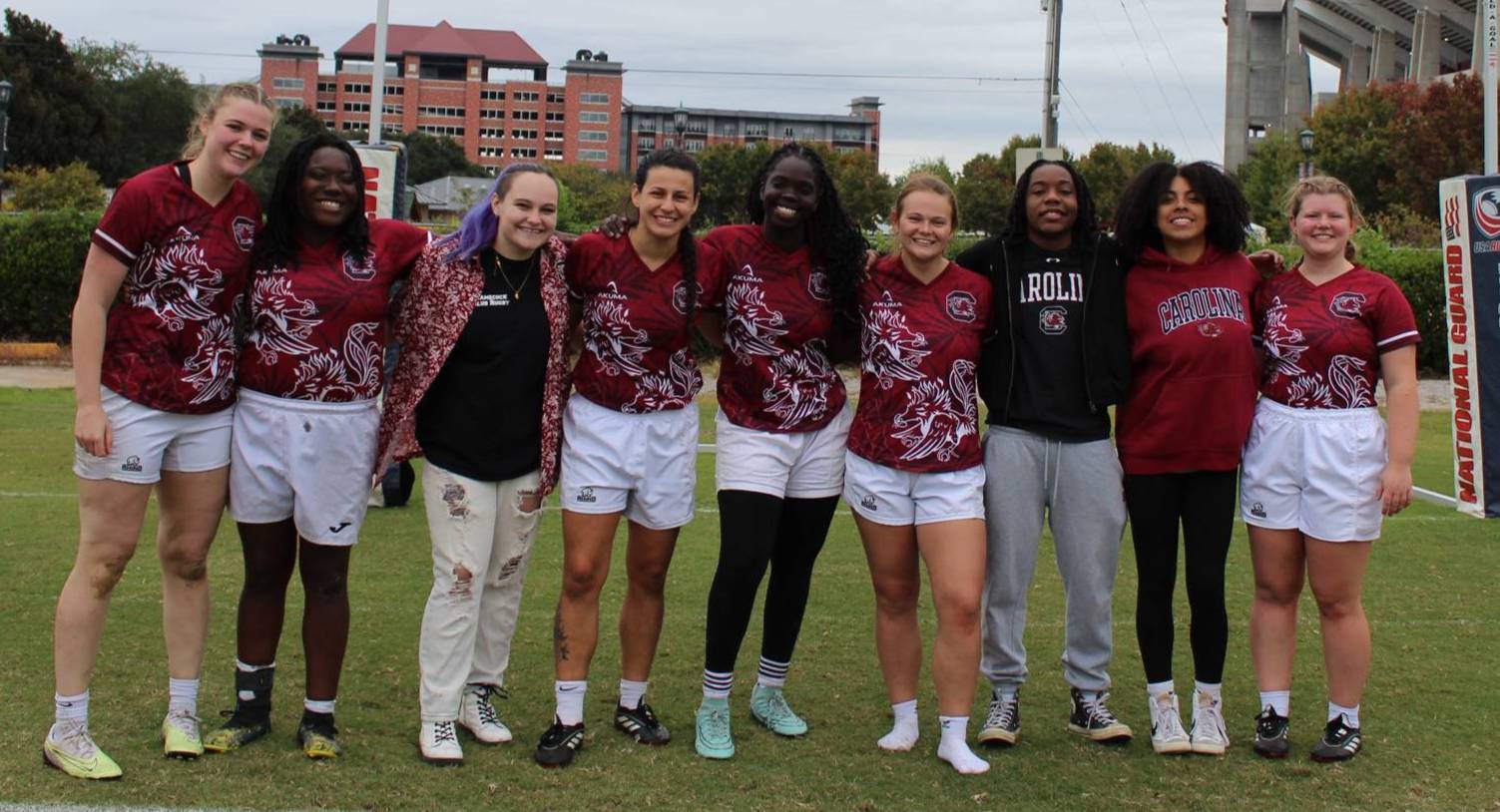
Reese also points to the sport’s national network: “...rugby is such a small community and such an unpopular sport in America, that you end up knowing everybody across the nation”. Reese further noted the remarkable capabilities and aspirations of rugby players: “...one of the newest astronauts is a woman who plays rugby and a lot of astronauts are women who played rugby in the past. One of my wife's friends is a Senator—she played rugby. Rugby players go on to do all these amazing things and it creates this network where you can go on Facebook and post, ‘Hey I’m looking for a job, any connections?’ and there will be 50 comments that are genuine saying, ‘Yeah, absolutely—I'll text my old teammate, they’ll hook you up.’ You automatically have this world of connections as soon as you start playing rugby.”
Gutierrez adds one more reason to join: transformation. “If you’re looking to redefine aspects of your life... I’ve redefined my relationship with femininity, I’ve redefined my social life, I’ve redefined my relationship with the gym, fitness, health...and I think the rugby community allows for that. The unknown can be scary, but it’s worth figuring out.”
Rugby & the Future
For this group, rugby isn’t a phase; it’s a lifeline. Thompson intends to keep playing after undergrad if physically possible, whether on an adult or women's team. If she remains at USC for grad school, she will use her one year of eligibility to keep playing with the team. Gutierrez doesn’t hesitate either: “Rugby till I die. I’ve never had this relationship with a sport or honestly anything in my life. It’s something I wrote about in my law school applications, my personal statement, everything I’ve touched—I always try to include rugby in it. It has become so integrated in my life and it's a part of who I am. Even though I want to be a practicing attorney, I still want to play rugby.... I do not see myself not playing rugby.” Reese goes on to illustrate the true capacity of the sport and how it adapts with you: “You can really play it forever. If you’re disabled, you can play wheelchair rugby—they still tackle each other, it's crazy.”
Gutierrez recalls fondly her experiences playing with teams outside of USC, particularly with a motley team at the annual Mardi Gras Rugby Tournament held in New Orleans, LA. She describes these opportunities as eye-opening and inspiring:
Learn More & Get Involved
When asked what recommendation they would give for folks considering rugby, Reese immediately replied: “Join earlier. You can do so much more than you think.”
What this sport has done for all players is catapult them into a community that nurtures personal growth and inspires confidence, resilience, and a supportive network. Being part of this team has shaped their identities, strengthened their voices, and shown them the power of community.
To learn more about USC Women’s Club Rugby, follow their Instagram page: @womenscockrugby
If you’re an interested student, find the Gamecock Women's Rugby Club Interest Form here.