In an era where health care and technology increasingly intersect, the College of Pharmacy is ensuring its graduates are prepared to navigate this evolving landscape through innovative digital health technology training.
“Digital health is clearly a key part of the future of health care,” says Patti Fabel, executive director of the Kennedy Pharmacy Innovation Center and clinical associate professor. “A good health care provider needs to be educated on anything being used to research, treat or touch a patient; digital health is very much that.”
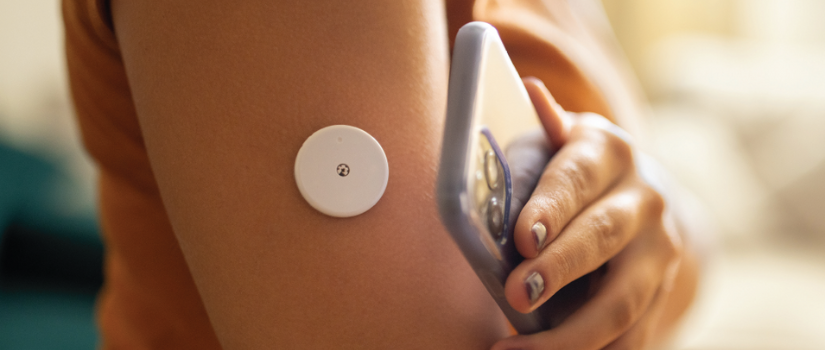
The college employs multiple approaches to digital health education, including a collaborative program pairing third-year student pharmacists with medical students to learn continuous glucose monitoring technology. Co-facilitated by Betsy Blake, director of interprofessional education, this initiative provides hands-on experience with devices on which patients with diabetes increasingly rely.
“If our students are familiar with the technology and the concepts of it before they transition into a practice setting, then they can ease into it much faster and understand the data they can get from it,” she says.
The program involves pharmacy and medical students applying CGMs to themselves to understand the patient experience firsthand, reflecting real-world health care delivery.
“In real practice, in real life, theyʼre going to have to communicate and collaborate,” Blake adds. “Whether theyʼre going to be in a clinical setting or whether theyʼre going to be dispensing it, they must be able to educate the patient on placement of the sensor, be able to analyze that data, and determine how to best use the medications for treatment.”
Beyond CGMs, the college has implemented a broader digital health curriculum. Fabel developed an advanced community practice lab on digital health that culminates with students completing the Digital Medicine Academyʼs applied digital health ethics course.
“We already did a good job at covering information technologies, electronic health records, dispensing systems, and continuous glucose monitors,” Fabel says. “However, I felt we needed to do more related to the technologies patients use in real time to manage their health.”
Students learn to evaluate digital health products, compare AI-developed care plans with those created by student pharmacists, identify risks associated with digital health products, and develop risk mitigation strategies.
We really feel like we accomplished what we set out to do, making sure that the next generation of pharmacists is equipped to properly and safely use digital technology to further our field and help patients.
The hands-on experience with CGMs has proven particularly impactful. “They love it,” Blake says. “It gives them that patient experience too, so they now have empathy for that patient.”
Students echo this sentiment, with one student noting: “This CGM experience has deepened my understanding of how continuous glucose monitoring benefits diabetes management. I will confidently recommend CGMs in practice, emphasizing their ability to provide real-time glucose trends, identify patterns and improve treatment adherence.”
“We really feel like we accomplished what we set out to do,” Fabel says, “making sure that the next generation of pharmacists is equipped to properly and safely use digital technology to further our field and help patients.”
Topics: Pharm.D. Program, Experiential Learning