Mahbub Alam began studying environmental sciences more than 15 years ago, when the young student
was passionate about understanding the environmental and public health challenges
that arise in a rapidly developing country like his native Bangladesh.
“I quickly realized that environmental contamination is not just an ecological issue,
it directly affects human health and communities,” he says. “Over time, this perspective
evolved into a strong motivation to bridge environmental science with public health,
using advanced analytical techniques to better understand exposure pathways and risks.”
USC has been a place where I not only developed as a researcher but also as a professional
ready to contribute to the field of public health. I believe that integrating scientific
research with real-world applications is essential for addressing today’s complex
environmental and public health challenges and for creating meaningful, sustainable
impact.
Mahbub Alam
Though he officially graduates this month, Alam has been using this intersecting background
since January as an Environmental Engineer at Siemens Energy in Charlotte. In this
role, he works to minimize the company’s environmental footprint, ensure regulatory
compliance, support sustainability and decarbonization initiatives, and contribute
to a strong Zero Harm culture across operations.
“My doctoral training has equipped me with strong analytical, problem-solving and
research skills, which I now apply to real-world industrial challenges,” Alam says.
“This transition allows me to bridge research and practice – translating scientific
knowledge into actionable solutions that protect both human health and the environment.”
Alam came to USC after earning bachelor’s and master’s degrees in environmental science
from Jahangirnagar University. He then completed a second master’s degree in environmental
science and engineering at Istanbul Technical University and taught at Bangladesh
University of Professionals for a few years.
When he began looking at doctoral programs, Alam was drawn to the strong reputation
of the Arnold School’s Department of Environmental Health Sciences (ENHS) and its location in a school of public health. The interdisciplinary nature
of the program, access to advanced analytical facilities, and collaborative/supportive
environments were also key factors in his decision.
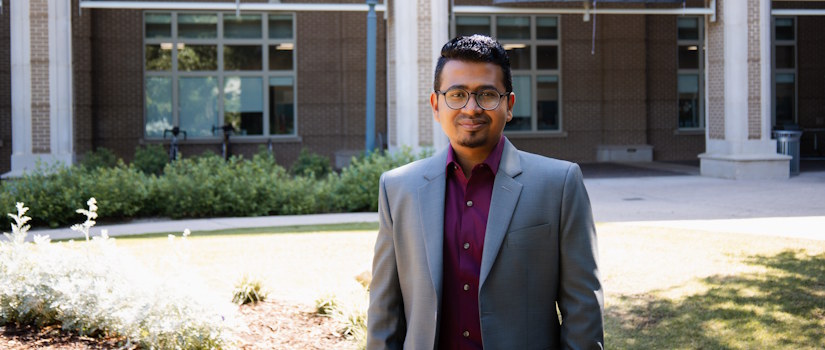
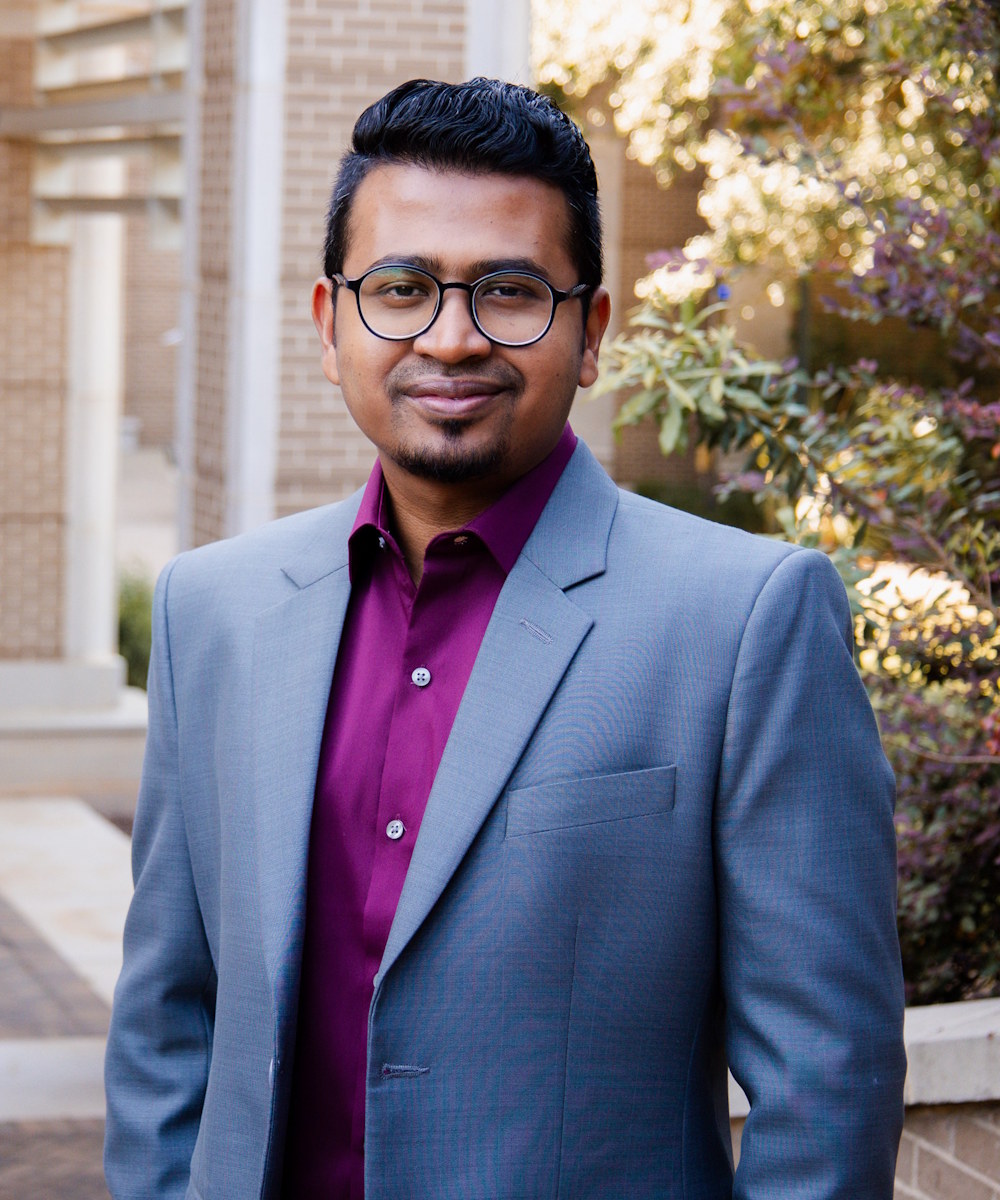
Mahbub Alam graduates this month with a Ph.D. in Environmental Health Sciences.
“From the beginning, I found a strong sense of mentorship and community that helped
me grow both academically and professionally,” says Alam, who found mentors in his
advisor Mohammed Baalousha as well as ENHS faculty Geoff Scott, Sean Norman, Dwayne Porter, Daniel Kilpatrick, Tom Chandler, and Tara Sabo-Attwood, and executive director of operations and accreditation Lee Pearson. “Dr. Baalousha’s guidance has been instrumental in shaping both my research and
professional career, and his passion for scientific discovery and commitment to excellence
have inspired me to think critically and pursue impactful, meaningful research. The
mentorship, encouragement and leadership I’ve received from the rest of the faculty
and staff have also played an important role in my academic journey, and this strong
network has helped me grow not only as a researcher but also as a well-rounded public
health professional.”
During his time in the Ph.D. in Environmental Health Sciences program, the Norman J. Arnold Doctoral Fellow has gained experience as a graduate
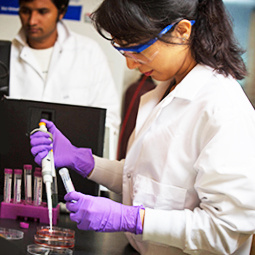
research assistant in the Center for Environmental Nanoscience and Risk as well as through his role as the Lab Manager and Safety Officer for Baalousha’s
Environmental Nanoscience and Analytics Laboratory. As a result of these hands-on experiences and his coursework, Alam’s resulting research
interests focus on the environmental fate and health impacts of emerging pollutants,
including incidental nanomaterials and environmentally persistent free radicals generated
from wildland–urban interface fires.
“I am particularly interested in understanding how contaminants like incidental nanomaterials,
micro- and nanoplastics transform in the environment and how they may pose risks to
human health,” he says.
Alam graduates with four peer-reviewed journal articles published as a first author
and seven as a co-author in prominent scientific journals. He has also presented his
research at three major conferences across the United States, reflecting both his
independent research contributions and collaborative work.
Beyond his doctoral research, he has engaged in multiple international collaborations,
including with colleagues in Bangladesh, contributing to a broader body of work totaling
over 40 publications in high-impact journals. This is an impressive feat for any doctoral
student but particularly for one who is juggling high-level research and lab management
(working with complex environmental samples and sophisticated instrumentation) while
adapting to a new country and culture.
He says that remaining focused yet adaptable was key to his perseverance and helped
strengthen his problem-solving skills. The comfortable and accessible lifestyle offered
by South Carolina’s capital city also offered some balance to his rigorous academic
pursuits – as did the sense of community among students and faculty.
“USC has been a place where I not only developed as a researcher but also as a professional
ready to contribute to the field of public health,” Alam says. “As I transition into
industry, I remain strongly committed to research and collaboration. I believe that
integrating scientific research with real-world applications is essential for addressing
today’s complex environmental and public health challenges and for creating meaningful,
sustainable impact.”