
Find Out More
The Ph.D. in Communication Sciences and Disorders degree prepares professionals for academic careers, and therefore its emphasis is on research and the scholarly study of the science of human communication and its disorders.

July 1, 2026 | Erin Bluvas, bluvase@sc.edu
Taylor Bryant’s passion for helping children develop language and literacy skills began at home. She knew she wanted to become a speech-language pathologist after seeing her sister experience difficulties learning to read and write.
“I watched her really struggle emotionally because of the time and effort that learning took for her,” the Sanford, North Carolina native says. “I also saw her benefit from the support of excellent teachers who provided individualized instruction.”
Bryant began working with children from low-income families in her hometown after several years of preparation to become a speech-language pathologist. As an English major at the University of North Carolina just an hour away in Chapel Hill, she also minored in speech and hearing sciences and then remained at UNC to earn a master’s degree in the same subject.
Her clinical fellowship at Dymond Speech and Rehab turned into a fulltime position, and Bryant spent a total of three years there before joining Emerge Pediatric Therapy back in the Triangle area. In both positions, she worked with children with a wide range of diagnoses, including ASD, ADHD, anxiety, dyslexia, developmental language disorder, articulation/phonological disorders, apraxia of speech, and fluency disorders.
“Though I could scaffold language and literacy interventions such that many students made clear and immediate progress, some did not,” Bryant says about her years in clinical practice. “Frequently, these students were struggling readers, and they were incredibly anxious and would avoid participating in any language and reading tasks, which made me realize the impact of negative emotions on academic performance.”
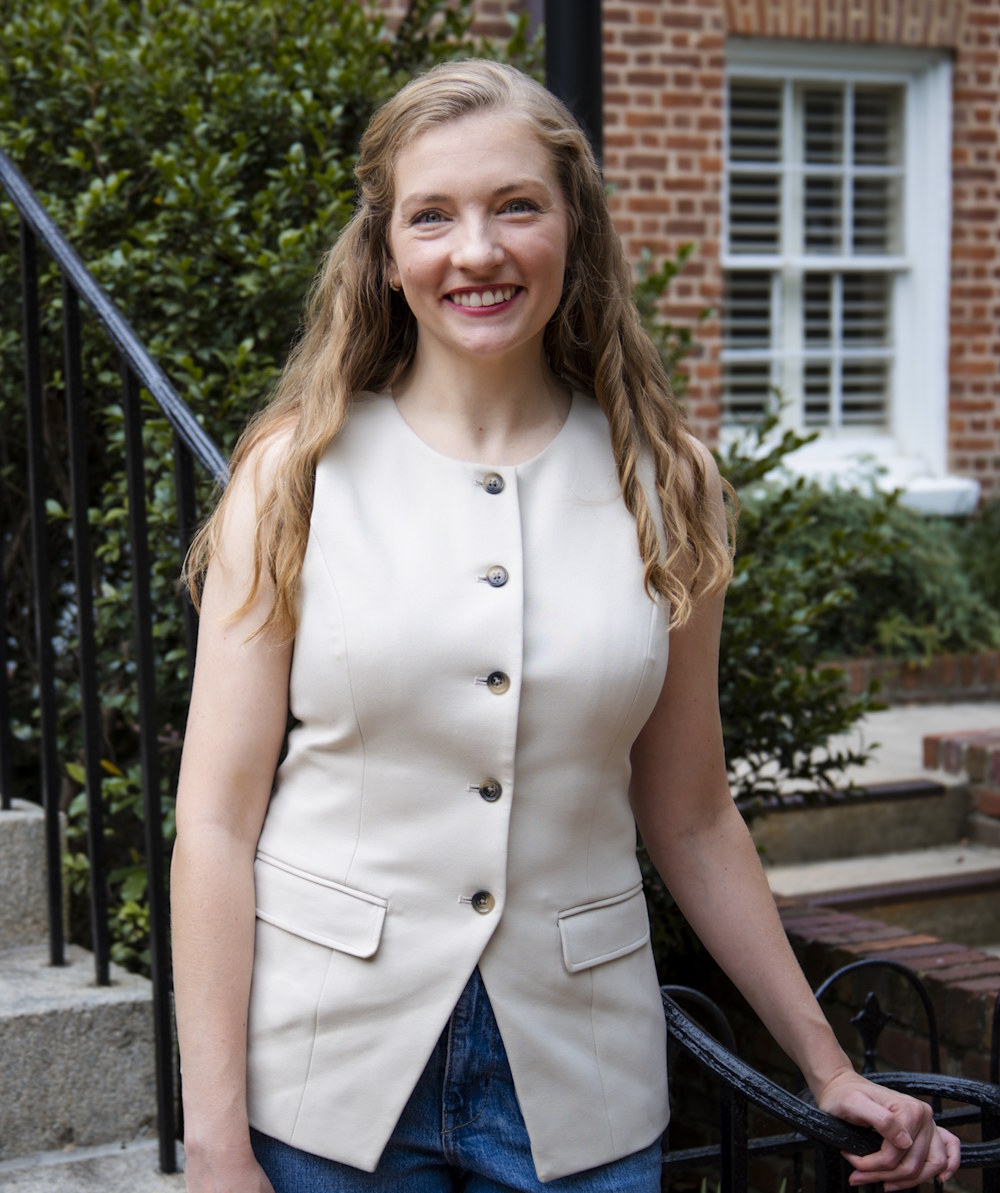
As a result, Bryant became interested in investigating why negative emotions occur and for whom they occur in children with developmental language disorder and dyslexia. She decided to pursue a doctoral degree to pursue this line of research and chose the Arnold School’s Ph.D. in Communication Sciences and Disorders (COMD) program so she could work closely with Suzanne Adlof, who shares interests in language and literacy development and disorders.
In the five years since she arrived at USC, the Norman J. Arnold Doctoral Fellow has immersed herself in coursework, research, teaching, clinical practice, and leadership activities. As a graduate research assistant in Adlof’s SC Research on Language and Literacy (SCROLL) Lab, she contributed to her mentor’s NIH-funded research and helped train and supervise 15 graduate, undergraduate and staff researchers.
“Dr. Adlof has been very encouraging of me, especially in supporting me to conduct an interdisciplinary line of research that involved faculty in the department of psychology in addition to communication sciences and disorders,” says Bryant, who also found mentors in COMD faculty Abigail Hogan and Erin Smolak as well as psychology professor Jane Roberts. “They have all really helped me think about strategic planning and how to keep moving forward, even when I’ve hit an unexpected red light in my research.”
With funding from various sources, Bryant led her own research related to emotional regulation among children. At USC she received a SPARC grant from the Office of the Vice President for Research as well as a scholarship to support her work on a pilot project as a Maternal Child Health Graduate Scholar. The National Institute on Deafness and Other Communication Disorders awarded Bryant a predoctoral fellowship, a F31 Ruth L. Kirschstein Predoctoral Individual National Research Service Award that provided Bryant with two years of funding to complete additional training and conduct her dissertation research. This was in addition to a T32 training grant she completed through the Medical University of South Carolina.
Bryant also taught undergraduate and graduate courses, earning the Outstanding Graduate Teaching Award from the Graduate School while mentoring more than a dozen students across all levels. In addition to service work at the national level, Bryant has held numerous roles at USC, including committee member and doctoral representative positions in her department and the Provost Office as well as peer mentor for the USC National Fellowships Office. She served as treasurer and president for the USC Associates in COMD Student Organization and co-founded the Educational Research Club Student Organization.
“One challenge has been balancing multiple professional roles simultaneously,” Bryant says of her doctoral experience. “Learning how to manage competing demands while maintaining high standards across all areas required organization, prioritization, and resilience.”
With plans to graduate in August, Bryant is certain that the balancing has paid off. The Elaine M. Frank Endowed Fellowship Award winner feels ready for her next step as an assistant professor in the Department of Special Education and Communication Disorders at the University of Nebraska-Lincoln. Her experience in research design, grant writing, mentorship, teaching and project management has prepared her to continue building her interdisciplinary research program focused on language, literacy, and emotion regulation in children with developmental language disorders and in children with dyslexia.
As she prepares to depart the South, Bryant reflects on the many positives of her USC experience. She suggests talking to students in the cohort ahead and connecting with faculty – which makes the university feel like a friendly, welcoming place. She’ll also miss the Saluda River Walk and her favorite Thai restaurant-bookstore.
“I really recommend becoming involved in the community outside of the university because
there are so many kind community members who are great listeners and advisors,” Bryant
says. “There are many people who are excited to meet students who are working hard
to achieve their goals and make a positive impact on the world. They can also help
to connect you with others.”
The Ph.D. in Communication Sciences and Disorders degree prepares professionals for academic careers, and therefore its emphasis is on research and the scholarly study of the science of human communication and its disorders.
The Arnold School is proud of our 2026 graduates, who will go on to change the world locally and globally. Learn about some of the other outstanding individuals who completed one of our 34 programs this year.