Artificial intelligence can churn out a 2,000-word essay in seconds. It can even replicate some of the world’s most famous pieces of art in incredible detail. Could it soon replace human creativity altogether? For now, the answer seems to be no. But as the lines between human and artificial creation continue to blur, researchers at the University of South Carolina investigate important questions surrounding AI.
At a recent conference hosted by the McCausland College of Arts and Sciences’ Institute of Mind and Brain, researchers, students and faculty gathered to examine the technology and the human thinking, creativity and decision-making that shape it. Scholars from fields including neuroscience, psychology, journalism, music and business came together to explore how AI intersects with their work.
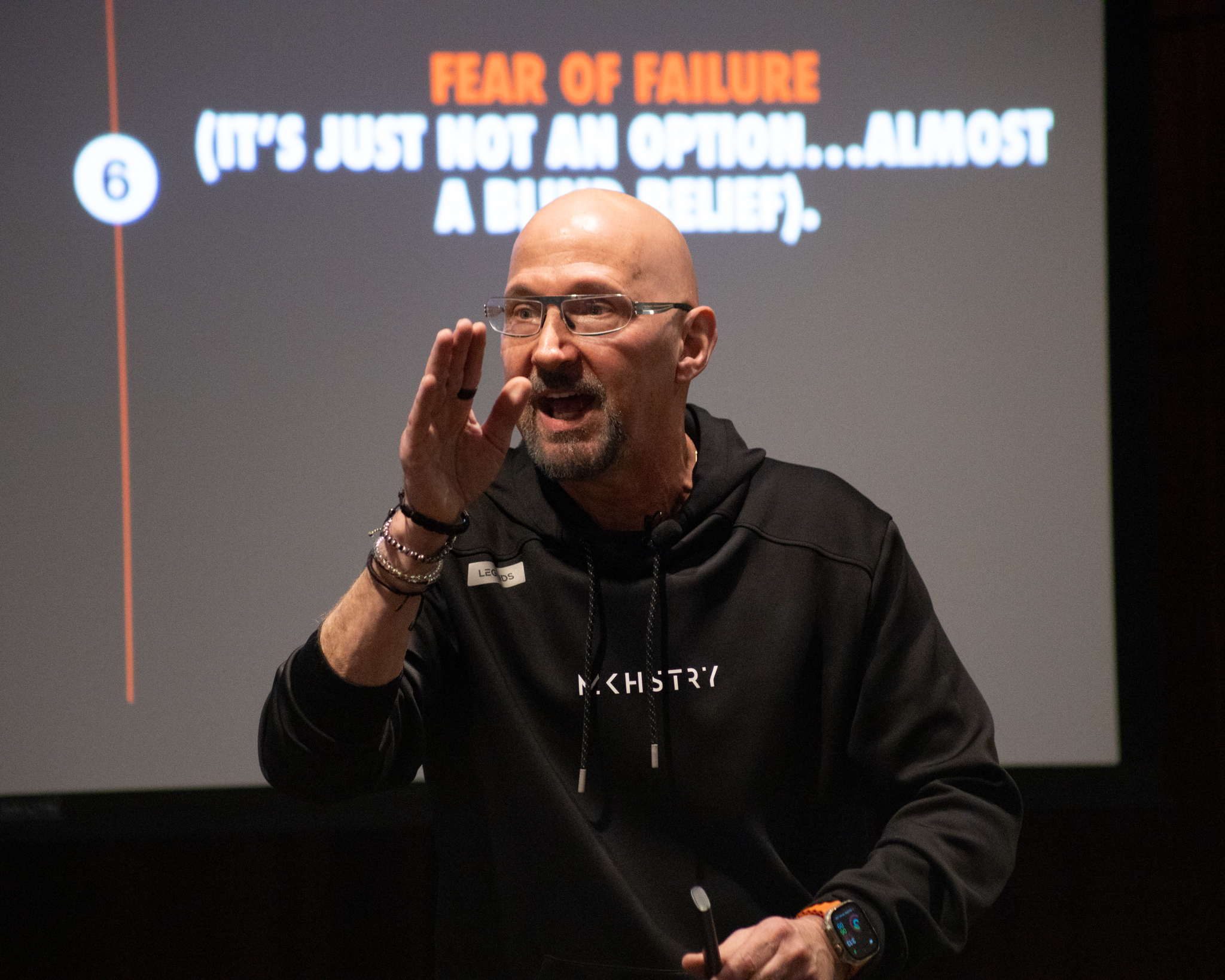
Professor Sabrina Habib from the School of Journalism and Mass Communications explored how AI is changing the creative process and teaching, emphasizing the need to maintain human agency and creative confidence, while Emily Schwitzgebel from the School of Music examined how AI-generated music shapes listener perception, often being seen as less expressive and credible. USC graduate Jeff Charney, the brand strategist behind the Aflac duck and Progressive’s Flo, also presented his talk, “The End of the Cre(ai)tive World As We Know It,” on how AI is transforming creative industries.
“With the rapid rise of AI, questions such as what it means to think, whether machines can think or understand, if machines can be creative, and what the implications are on human creativity, have gained new urgency,” said IMB Director Rutvik Desai.
While AI can enhance productivity and generate new possibilities, it also raises important concerns about autonomy, authorship and the nature of creativity itself. Presenters at the conference emphasized that creativity is not just about producing novel outputs, but about intentionality, authenticity and lived experience. Researchers stressed the importance of maintaining human agency when working with AI, ensuring that technology serves as a tool for augmentation rather than a substitute for expertise.
“By combining studies of the mind and brain with AI, many of the investigators at the Institute for Mind and Brain are tackling these questions head on,” Desai said. “They are stimulating discussions on creativity, the essence of being human and how we can prepare ourselves and our students for this new world.”