by Leen Darwisha
I have spent most of my life translating. Not just words, but worlds. At home, I translated medical instructions for my father when diabetes entered our lives uninvited. At school, I translated confusion into confidence for peers whose voices remained trapped behind raised hands they never lifted. Somewhere in all this translation, I discovered a truth: South Carolina's greatest problems are not about resources or regulations. They are about connection.
Walk through any hospital waiting room in our state and you will see the walls I describe. Families sitting in silence, not because they lack questions, but because they lack the language to ask them. Visit any high school classroom and you will find students whose potential remains buried beneath uncertainty about pathways they cannot see. These walls exist everywhere: between communities that never speak, between students and opportunities that feel unreachable, between patients and care that should heal but often confuses.
But walls can be broken. I know because I have watched it happen.
When my father's diabetes diagnosis arrived with a mountain of incomprehensible instructions, I became an architect of understanding. I mapped his medications into a system that made sense. I transformed confusing medical charts into daily routines our family could follow. What began as personal necessity evolved into something larger: the realization that guidance changes everything.
This realization led me to create the Harvard VISION Global Health Chapter in Upstate South Carolina. Here, students who once felt invisible in science classes discover pathways into medicine and research. Peers who assumed college was impossible learn to navigate applications and financial aid. Young people who carried their families' struggles in silence find their voices and their power.
South Carolina needs more spaces like this. Not grand government programs, but grassroots networks where people step up for each other. Community mentorship hubs in every county where high schoolers connect with professionals who share their background. Healthcare advocacy groups that train bilingual volunteers to accompany families to medical appointments. Student leadership councils that teach young people to identify problems in their communities and build solutions.
The transformation happens one conversation at a time. A student finally asks the question they were afraid to voice. A family understands medical instructions for the first time. A teenager realizes their dream of becoming a doctor is not impossible, just uncharted. These moments seem small, but they accumulate into something powerful: a state where people refuse to let others navigate challenges alone.
I have seen what connection can accomplish. Every peer I have guided, every family I have helped advocate for their health, every student who has discovered their potential through mentorship proves the same point: when someone listens, explains, and encourages, everything shifts.
South Carolina does not need to choose between sides. But it must choose connection over isolation. It must build bridges where walls once divided communities. And it needs citizens who can translate possibilities for one another.
This is how we improve our state. Not through distant policies, but through present people. Not through grand gestures, but through daily acts of guidance and empowerment. One bridge at a time, one conversation at a time, one connection at a time.
The fingerprints we leave behind through this work will reshape South Carolina into a place where no one translates their struggles alone.
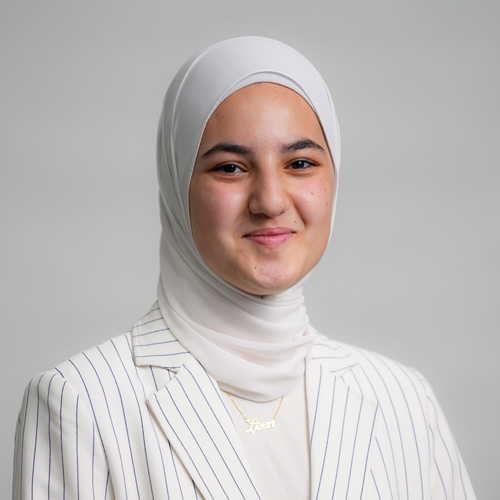
About Leen Darwisha
Leen Darwisha is a senior at Riverside High School in Greer, where Dr. Allison Thompson was her tenth-grade AP English Language and Composition teacher. Originally from Syria, Leen is an incoming first-generation college student at Emory University on the pre-medicine track. She plans to major in neuroscience and behavioral biology with a minor in Spanish and work as a family medicine physician to support families like her own who faced linguistic and cultural barriers within the healthcare system. She is the daughter of Ali Darwicheh and Rana Alomari.